
Physical Therapy Referral Marketing: How Orthopedic Practices Build Steady Referrals
Written by Muzz, founder of Care Verb. Last reviewed November 2026.
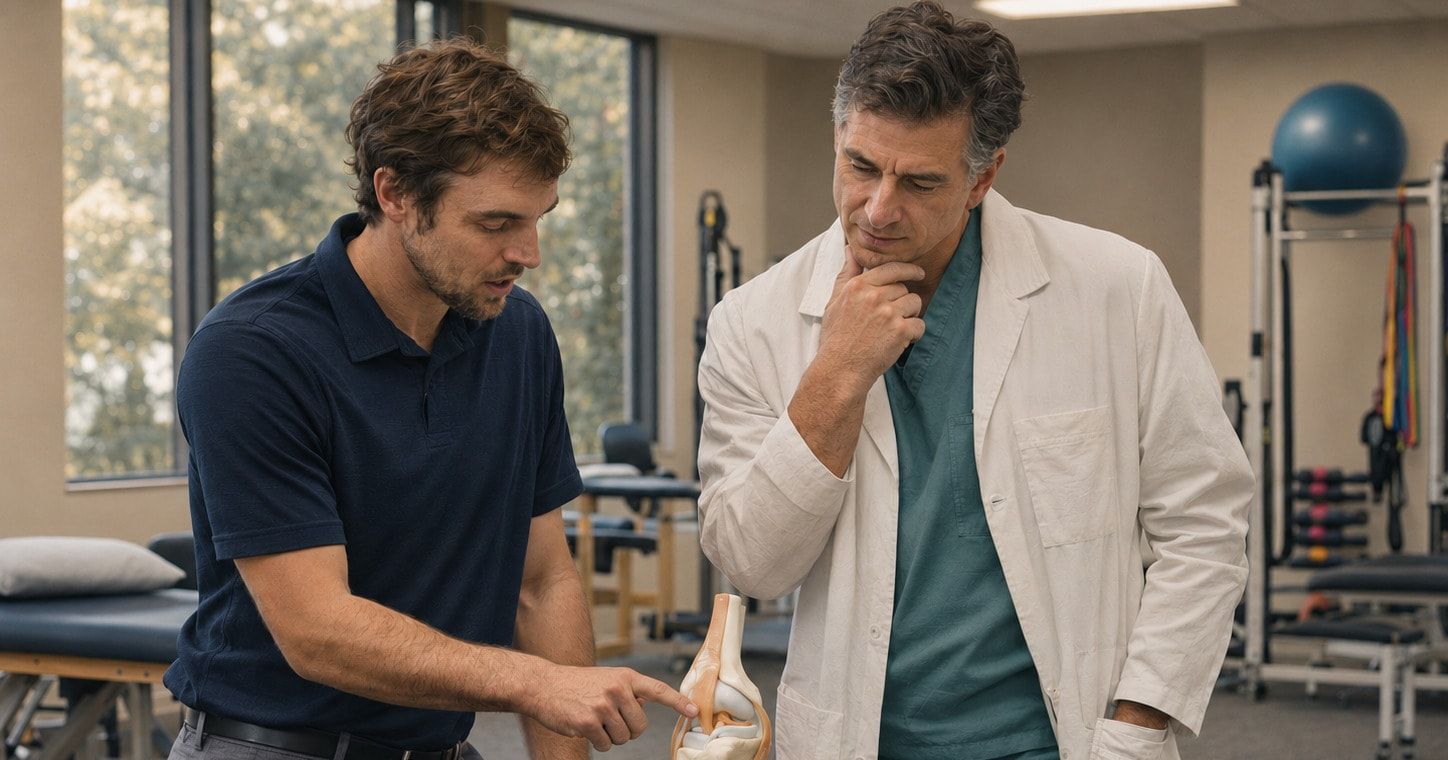
The short answer: physical therapists often see orthopedic patients before any surgeon does, and they know when a patient needs more than therapy. Orthopedic practices that earn PT referrals do three things well: they reach out consistently, they make referring effortless, and they keep therapists informed. Done well, referral outreach is one of the most reliable ways to grow an orthopedic practice.
Why PT referrals matter so much
A patient with a sore shoulder often starts with physical therapy, sometimes on their own and sometimes through their primary care doctor. After a few weeks, the therapist is often the first to notice that the patient isn't improving and needs an orthopedic evaluation.
At that moment, the therapist recommends a surgeon, and patients usually trust that recommendation. If your practice is the name that comes to mind, you get the patient. If it isn't, a competitor does.
The same goes for gyms, personal trainers, sports clubs and chiropractors. Anyone who works with people's bodies regularly sees injuries before a surgeon does.
What PT clinics actually want from an orthopedic practice
Referral relationships work when both sides benefit. Physical therapists usually care about four things:
- Fast appointments for the patients they send. A referred patient who waits six weeks reflects badly on the therapist.
- Communication back. A short note on what you found and what's next keeps the therapist in the loop.
- Getting rehab patients back. After surgery, many patients want to continue with the therapist who already knows them. Make that easy when it's the patient's choice.
- Respect for their judgment. Therapists want to be treated as partners in the patient's care, not as a lead source.
How to find the right referral partners
Start with a radius around each of your locations, about the distance your patients realistically travel. Then list:
- Physical therapy clinics
- Gyms, CrossFit boxes and personal trainers
- Sports clubs and school athletic programs
- Chiropractors
- Primary care practices
- Pharmacies
Focus first on the businesses closest to you that see the patients you treat most: joint pain, sports injuries, back and neck problems.
Outreach that works: email
In Muzz's experience, email outreach consistently increases referrals. It's simple, it scales across dozens of clinics, and it gives the other business something it can forward, save and come back to.
A good outreach email is short, specific and about them, not you. Here's an example:
Subject: Fast orthopedic appointments for your patients
Hi [Name],
I'm reaching out from [Practice], an orthopedic practice a few minutes from [Clinic]. When your patients need an orthopedic evaluation, we can usually see them within [X days], and we'll send you a short update after their visit.
If it would help, here's our referral form and direct line: [link / number].
Thank you for the care you give our community,
[Name, title]
Then follow up. One email rarely builds a relationship. A short follow-up a few weeks later, and occasional updates when you add a new surgeon or service, keep your practice top of mind.
Make referring effortless
If referring to you takes more than a minute, therapists will refer somewhere else. Make it easy with:
- A referral page on your website with a short form, fax number and direct phone line
- A clear promise about how fast referred patients are seen
- A named contact at your practice who handles referrals
Make it a two-way relationship
The strongest referral networks run both ways. Send therapists a short update after every visit, and when a surgical patient needs rehab, make it easy for them to continue with the therapist who already knows them, if that's their choice.
Protect the referral online
A referral doesn't end the patient's research. Before they book, most referred patients search the surgeon's name. If they find an outdated profile, no reviews or a weak website, some of them will book elsewhere, even with a referral in hand.
Every surgeon needs a strong page on your website, an accurate Google profile and steady, honest reviews, so the patient finds exactly what the therapist promised.
Track where referrals come from
You can't grow what you don't measure. The simplest method is adding a referral source field to your intake forms, with sub-fields for the type of source (physical therapist, gym, primary care, chiropractor) and the specific clinic. That shows you which relationships are worth investing in and which need more attention.
Mistakes to avoid
- Sending one email and giving up. Relationships build over months, not one message.
- Making the email about you. Therapists care about their patients, not your credentials.
- Leaving therapists in the dark. One-way relationships fade.
- Slow appointments for referred patients. Nothing ends a referral relationship faster.
- Not tracking anything. Without tracking, you can't tell which partners matter.