
Physician Branding for Surgeons: Social Media That Brings Real Patients
Written by Muzz, founder of Care Verb. Last reviewed November 2026.
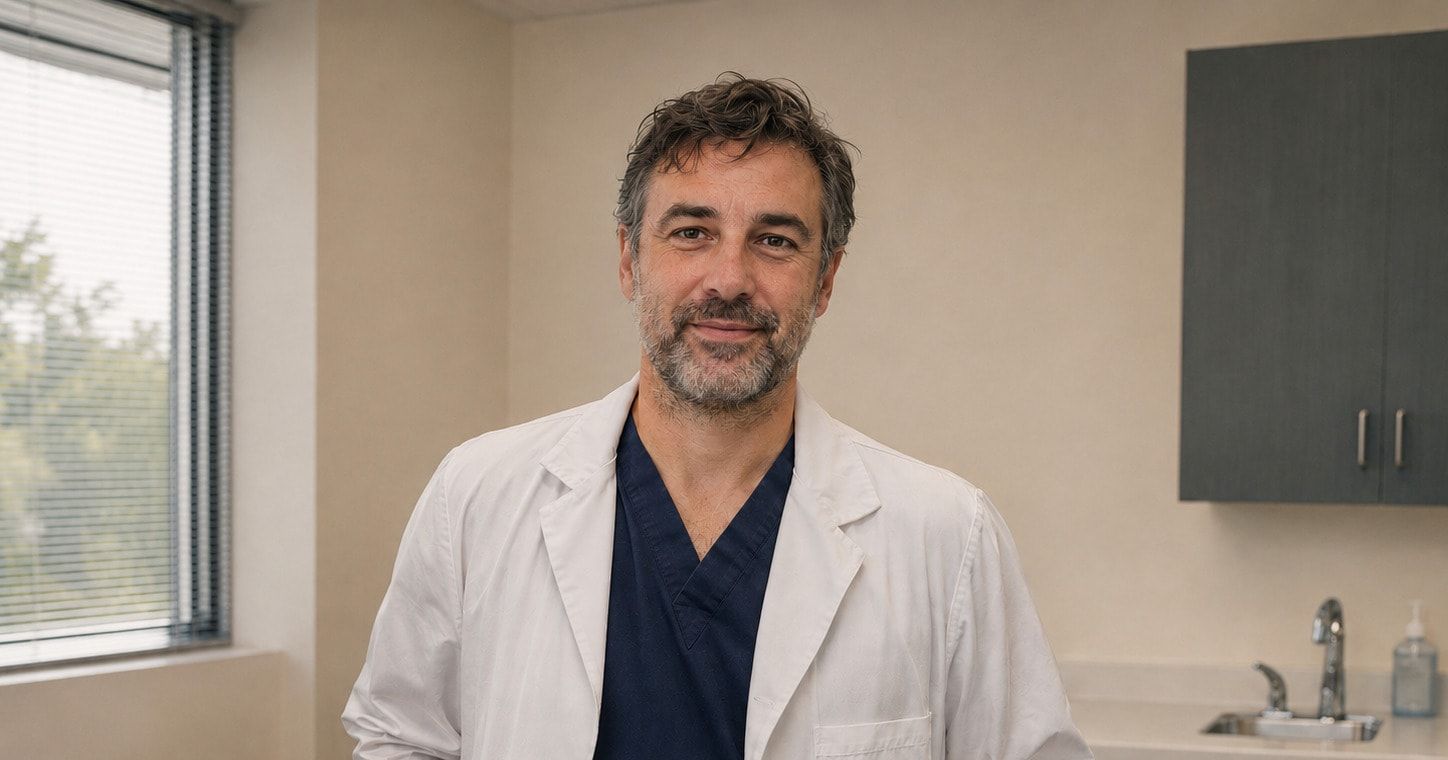
The short answer: physician branding is how a surgeon becomes known and trusted by name. Today, social media sits at the center of it. Patients watch surgeons' videos, check their profiles and read their reviews before ever calling. But a strong physician brand isn't about going viral. It's about being known by the people who can actually become your patients: local, relevant and consistent across social media, your website, Google and the directories patients check.
Why surgeons need a personal brand now
Patients don't choose a building. They choose a surgeon. "I'm seeing Dr. Patel for my shoulder" is how people talk about surgery.
What's changed is where that trust is built. Patients now meet surgeons online first, through a short video on Instagram, a procedure explainer on YouTube, a Google profile or a review. When two practices look identical on paper, people choose the one they feel they know. Social media is how they get to know you before they ever walk in.
The social media trap: reach isn't patients
Many agencies now pitch doctors on becoming full-time content creators. The promise is that views turn into patients. Usually, they don't.
Say you run a single-location clinic in Arkansas, where you're licensed. A video of yours goes viral and reaches thousands of people in Oklahoma, Ohio and Oregon. The numbers look impressive, but almost none of those viewers will ever become your patients. They can't travel to you, and you can't treat them. Those are irrelevant views, and chasing them costs you time you don't have.
The goal isn't the biggest audience. It's the right one: people in your area, with the conditions you treat, deciding who to see.
What relevant social media looks like for a surgeon
Patients want to know everything before their first visit. Relevant content answers those questions:
- About you: who you are, why you chose your specialty, how you work with patients
- About your practice: your team, your clinic, what a first visit looks like
- About your procedures: what happens, who's a candidate, what recovery really involves
- About the conditions you treat: symptoms, when to see a specialist, what the options are
Every post should help a local patient understand their problem and feel they already know you. That's what turns followers into appointments.
Choosing the right platforms
Use the platforms where your local patients and referrers actually spend time, and skip the rest. For many surgeons that's Instagram and Facebook for local patients, YouTube for longer procedure explainers patients search for, and LinkedIn for referring physicians. There's no rule that you need to be everywhere, only where it brings results.
Video: the heart of a surgeon's social presence
A two-minute video of a surgeon explaining a procedure in their own words builds more trust than any page of text. It's also the content that works best across every social platform.
You don't need a film crew. A phone, good light, a quiet room and a simple script are enough. Good videos to start with:
- Who you are and why you chose your specialty
- How you decide whether someone needs surgery
- What recovery from your most common procedure really looks like
- Answers to the questions patients ask you most
Where social media should lead: your surgeon page
Social media gets attention. Your surgeon page turns it into appointments. On sites we've tracked, a single physician's bio page often converts more of its visitors than any other page on the site.
Every social profile should link to a dedicated surgeon page with:
- A real photo, not a stock image
- What you treat, in plain language
- Training and credentials, kept brief
- Your approach to surgery vs other options
- Your introduction video
- Reviews that mention you by name
- A clear way to book with you
Burying every surgeon on one "Our Team" page is one of the most common mistakes in surgeon marketing.
Google profiles and directories
Patients who see you on social media often search your name next. What they find needs to match.
Whether a surgeon should have their own Google Business Profile depends on how much trust Google already gives the practice. When Google clearly recognizes the practice's name, address and phone details, separate physician profiles can work well. For newer practices, one strong practice profile is usually the better start. Done right, individual profiles bring real results: a well-run surgeon profile can become a steady source of new-patient calls.
Healthgrades, Vitals, WebMD, Zocdoc and insurance directories need the same care: accurate photos, specialties and details, with the same name format everywhere, including your social profiles.
Reviews: social proof that converts
Reviews are the most trusted form of social proof. Encourage every patient to leave an honest review and mention what made the experience easy. You can share positive reviews on social media too. Never offer anything in exchange for positive reviews, which the FTC's 2024 rule prohibits, and never confirm in a reply that a reviewer was your patient, because of HIPAA.
Source: FTC: Consumer Reviews and Testimonials Rule, Questions and Answers
Do you need to be a full-time creator?
No. Not every surgeon needs a big personal brand, and many shouldn't try. If you run a single location and you're seeing patients full time, you don't have three hours a day for social media, podcasts and appearances. Trying usually means burning out or posting inconsistently, and neither helps.
Our honest recommendation: if you can't realistically give your own marketing around three hours a day, keep your social media focused. A few strong videos, regular relevant posts about your procedures and conditions, a great surgeon page, accurate profiles and honest reviews. That's enough to become the surgeon local patients feel they know.
If you can give it that time and want to build your name more broadly, that's what our upcoming Founder Marketing Plan is built for.
Our Founder Marketing Plan (coming soon)
We're building a plan for surgeons and practice founders ready to invest real time in their personal brand. It isn't available yet, but here's what it will include:
- Local production support: we arrange local resources to help you shoot your content
- A dedicated team member who works with you on trends, scripts and research
- A content plan covering what to post and when
- Your personal PR manager, keeping your brand consistent and moving
You'll bring your expertise and your time. We'll handle the planning, scripting, timing and production support, so every hour you invest builds your name with patients who can actually reach you. The Founder Marketing Plan will be a separate plan, priced on its own.
Personal brand and practice brand, working together
A common worry is that a surgeon's personal brand will compete with the practice. Done right, it does the opposite. Link everything: your social profiles point to your surgeon page, your surgeon page sits on the practice website, and booking runs through the practice. Each surgeon's reputation strengthens the practice, and the practice's credibility supports each surgeon.
Mistakes to avoid
- Chasing views instead of local patients.
- Posting trends with nothing to do with your specialty.
- Social profiles that lead nowhere, with no link to a surgeon page or booking.
- Inconsistent details between social media, Google and directories.
- Starting big and stopping, when steady, focused posting beats bursts of activity.