
Social Media Marketing for Specialty Practices
Written by Muzz, founder of Care Verb. Last reviewed November 2026.
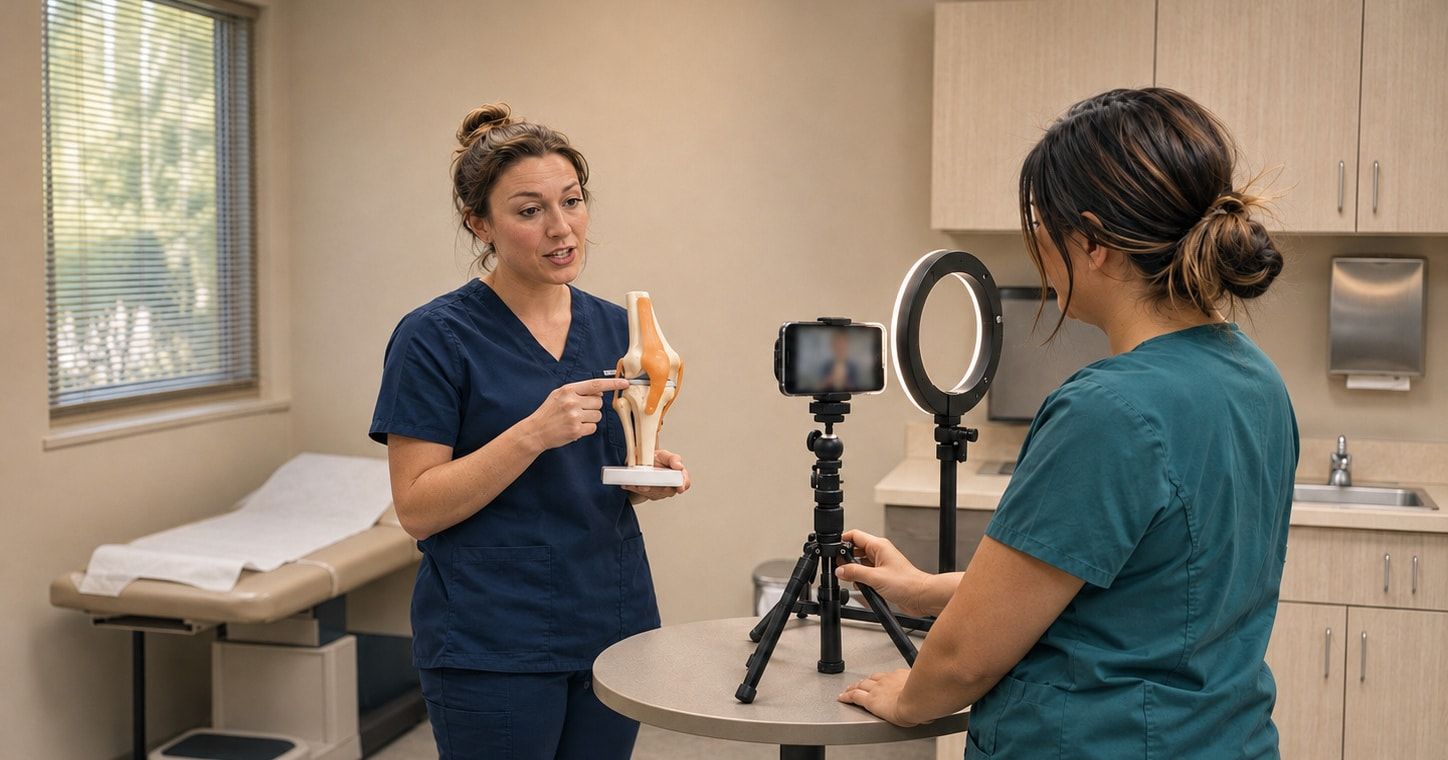
The short answer: social media works for specialty practices when it's local, relevant and consistent. It doesn't work when it chases trends and views. The goal isn't followers. It's making sure that when someone near you needs an orthopedic, spine, pain or podiatry specialist, your practice is the one they already feel they know. Post about your procedures, the conditions you treat, your team and your clinic. Stay within HIPAA. Measure success in calls and bookings, not likes.
Why social media matters for practices now
Patients check a practice's social media the way they check reviews: to see if it's real, active and trustworthy. A practice whose last post was eight months ago looks closed. A practice that regularly explains procedures, introduces its team and answers common questions looks like a place that cares.
Social media also shapes what AI tools and search engines know about you. Active, consistent profiles help build the picture of an established local practice.
Views aren't patients
Many practices are pitched on going viral. The problem is simple: a specialty practice can only treat people who can reach it. A video seen by 50,000 people across the country may bring zero patients, while a video seen by 2,000 people within 20 miles of your clinic can fill appointments.
Every decision, from what to post to where to post and who to target, should come back to one question: will this reach and help people who could actually become our patients?
What to post
Patient education
- What a condition is and when to see a specialist
- What a procedure involves and what recovery looks like
- Myths vs facts, like "Does every bunion need surgery?"
Your practice
- Your team and what they do
- Your clinic: the front desk, exam rooms, parking, what a first visit looks like
- New services, new physicians, new locations
Trust and proof
- Positive reviews, shared with care
- Physician videos answering common questions
- Community involvement: sports teams, health events, local partners
Where to post
Pick the platforms where your local patients actually spend time:
- Facebook: still strong with older patients, which matters for podiatry, joint replacement and pain management
- Instagram: clinic life, short videos, team introductions
- YouTube: longer procedure explainers that patients search for, which also help your website
- LinkedIn: relationships with referring physicians and local health partners
Two or three platforms done well beat six done badly.
How often to post
Consistency matters more than volume. A steady rhythm that your team can sustain, planned a month at a time, beats daily posting for two weeks followed by silence. The right frequency depends on your strategy and how much your physicians can realistically review.
HIPAA and social media
Social media is where practices most often slip on privacy. Keep these rules:
- Never post patient photos, stories or details without written authorization.
- Never confirm someone is a patient in comments or replies, even if they say so themselves.
- Never discuss a patient's care publicly, even to correct a negative comment. Move it to a private conversation.
- Check every photo's background for charts, screens or other patients.
Paid social, once your content is ready
Facebook and Instagram ads can reach local patients, but they work best after your organic content is in place, so people who see an ad find an active, trustworthy profile. Meta also restricts health advertisers: no targeting by medical condition, and no ad copy implying someone has a condition. "Suffering from knee pain?" isn't allowed. "Knee pain treatment in Dallas" is.
Source: Meta Advertising Standards: Privacy Violations and Personal Attributes
Measuring what matters
Likes and followers are easy to count and easy to misread. The numbers that matter:
- Website visits from social media, especially to physician and procedure pages
- Calls and form submissions from people who found you on social
- Messages asking about appointments
- New patients who mention social media on their intake form
If social media isn't moving any of those, change what you're posting.
Common mistakes
- Chasing trends unrelated to your specialty
- Posting only promotions, with no education or personality
- Going silent for months after a burst of activity
- Ignoring comments and messages, which are often patients asking how to book
- Measuring likes instead of patients