
Orthopedic PPC Services That Book Surgical Consults
Orthopedic PPC puts your practice at the top of Google when patients search for joint replacement, sports injuries or an orthopedic surgeon near them. We're an orthopedic PPC company that builds and manages Google Ads campaigns for independent practices, tracks every call, and reports on what each new patient actually costs.
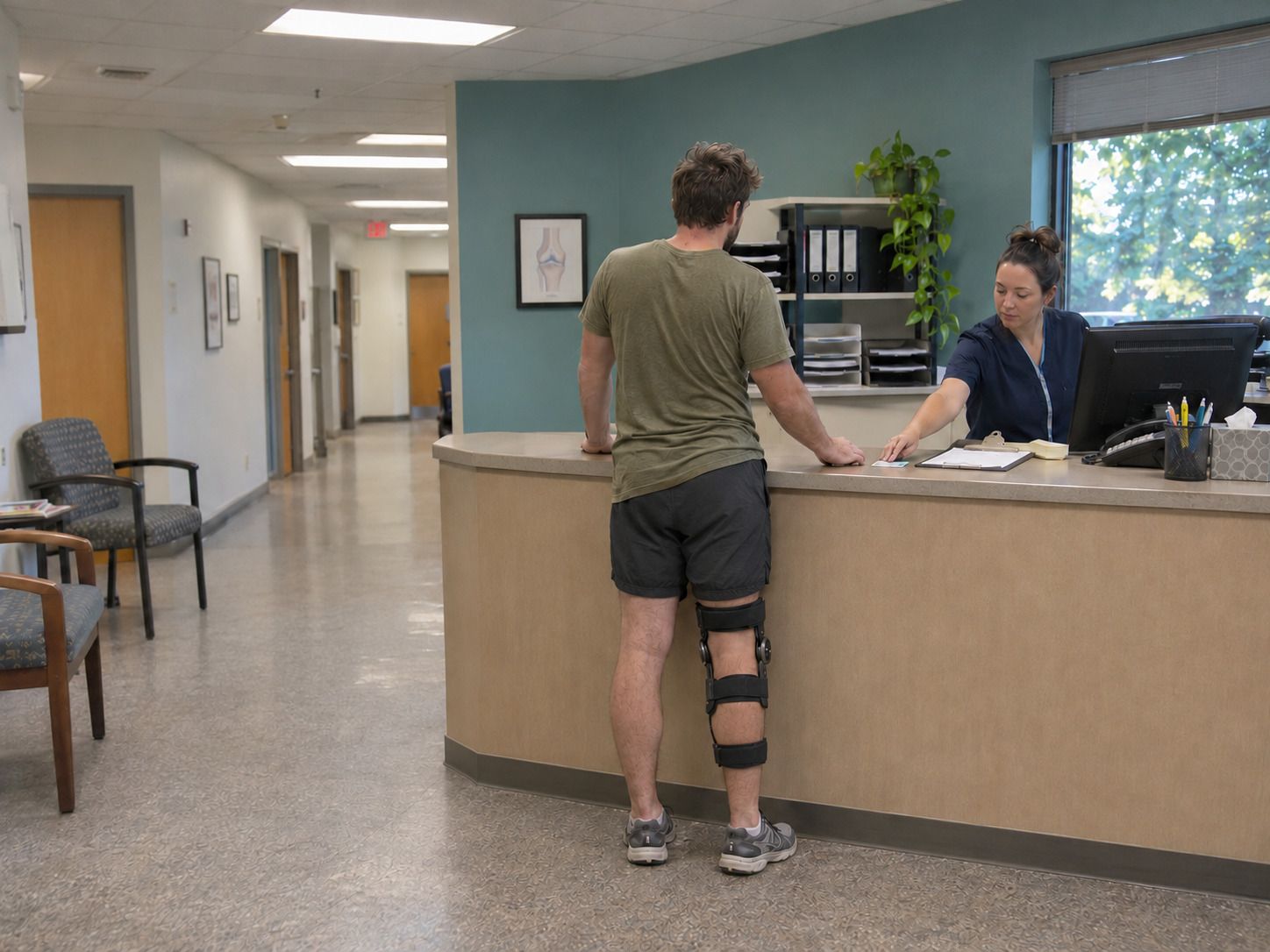
How Google Ads works for an orthopedic practice
Every time someone searches "knee replacement surgeon near me," Google runs an auction among the practices bidding on that search. You don't win by paying the most. You win by pairing a fair bid with a relevant ad and a landing page that answers the patient's question. A clear page about knee replacement, with recovery timelines and a visible phone number, will often beat a bigger budget sending clicks to a generic homepage.
For orthopedics, what matters most is intent. "Knee replacement surgeon" is someone close to booking. "Why does my knee click" is someone still researching. We spend heavily on the first and carefully on the second.
Campaigns by service line
Each service line gets its own campaign, budget and landing page, so one procedure's costs never hide another's results:
Joint replacement
knee, hip and shoulder, each separately
Sports injuries
ACL, meniscus, rotator cuff and same-week injury appointments
Hand and wrist
carpal tunnel, trigger finger, fractures
Spine
for practices with spine surgeons
General orthopedics
fractures, joint pain, second opinions
Walk-in and orthopedic urgent care campaigns
If your practice offers walk-in or same-day orthopedic care, these campaigns usually pay off fastest. Someone with a sprained ankle wants to be seen today, not to research for three months. Ads for "orthopedic urgent care near me" during your open hours often book patients the same day.
Orthopedic advertising beyond search
Remarketing: reminding people who visited your site, without using any health information.
YouTube: short surgeon videos explaining procedures, shown to people in your area.
Facebook and Instagram: added once your content is ready, using Meta's current health-advertiser rules: no condition-based targeting, and no copy implying someone has a condition.
HIPAA-safe tracking
We track calls through CallRail, set up HIPAA-safe and only with your permission. No patient health information is ever sent to Google or Meta. Ad platforms see that a conversion happened, never who it was or why they called.
Healthcare ad policy most agencies get wrong
- Google restricts how some treatments and medications can be advertised.
- Meta can limit which conversion events health businesses can optimize for and blocks copy like "Suffering from knee pain?" Copy like "Knee pain treatment in Dallas" is fine.
- Local Services Ads: orthopedic surgeons are eligible, and Google checks your license and insurance first. For healthcare, Google doesn't share call recordings or let you dispute leads, so we track what happens after each call.
Sources: Meta: About data source categories; Meta: Understand data sharing restrictions
Multi-location account structure
Each location gets its own campaigns, budgets and call tracking, so you can see exactly which office the patients are coming to and move budget where it works best.
Landing pages and what happens after the click
The click is only half the job. Every campaign leads to a page built for that procedure, with a phone number visible on every screen, a short form and a clear next step. Then the call has to be answered: we review how new-patient calls are handled, because an unanswered paid call is the most expensive call you'll ever buy.
What a new orthopedic patient costs
Industry data puts physicians and surgeons at around $4.76 per click and $40 per lead on Google Ads. Orthopedic surgery usually costs more, especially in competitive cities. These model scenarios show realistic numbers.
Sources: LocaliQ: Search Advertising Benchmarks 2026; LocaliQ: Healthcare Search Ads Benchmarks
Model scenario 1: Joint replacement, one location, competitive metro
An illustration built from industry benchmarks and an assumed 30% booking rate, not a real client result.
| Item | Value |
|---|---|
| Monthly ad spend | $2,000 |
| Average cost per click | $12 |
| Calls and forms | about 12 |
| Booked by the front desk (30%) | 3 to 4 new patients |
| All-in cost per new patient, including our $600 fee | about $720 |
Model scenario 2: Walk-in orthopedic care, one location
An illustration built from industry benchmarks and an assumed 50% booking rate, not a real client result.
| Item | Value |
|---|---|
| Monthly ad spend | $1,000 |
| Average cost per click | $6 |
| Clicks | about 167 |
| Conversion rate | 9% |
| Calls and forms | about 15 |
| Booked (50%, since patients want to be seen today) | 7 to 8 new patients |
| All-in cost per new patient, including our $600 fee | about $210 |
A single joint replacement patient is usually worth far more to a practice than the cost of acquiring them, but only if the front desk books the call.
What we manage each month
Campaign builds by service line and location
Keywords, bids and blocked searches
Ad copy within Google's and Meta's healthcare rules
Landing pages for every campaign
HIPAA-safe call and form tracking
Monthly reporting on calls, forms, cost per lead and booked patients
Pricing
Ads management is an add-on to our 6-Month New Patient Program: $600 a month or 10% of ad spend, whichever is higher. You pay ad spend directly to Google. We recommend at least $1,000 a month in ad spend.
PPC and SEO together
Ads bring orthopedic patients this month. SEO brings them every month after. Ad data shows which searches book patients, and we use that to build pages that rank for those searches without paying per click.
FAQ
How much should an orthopedic practice spend on Google Ads?
At least $1,000 a month. Practices marketing joint replacement in competitive cities usually need more.
What's a good cost per new orthopedic patient?
It depends on the procedure, city and how many calls your front desk books. Our model scenarios show a realistic range, from about $210 for walk-in care to about $720 for joint replacement, all-in.
Can you run ads for joint replacement and spine surgery?
Yes. Each gets its own campaign and landing page.
Is remarketing HIPAA compliant?
We build remarketing audiences from site visits only, never from health information, and we sign a BAA whenever our work touches patient data.
Do you run Facebook ads for orthopedic practices?
Yes, once your content is ready, and always within Meta's health-advertiser rules.
How fast will we see appointments?
Usually within the first few weeks. Walk-in and urgent care campaigns are often fastest.
Have another question? See all our frequently asked questions.
Find out where your ad budget is leaking
Our free Patient Leak Audit checks your ads, landing pages, Google profile and calls.
Get Your Free Patient Leak AuditWritten by Muzz, founder of Care Verb. Last reviewed November 2026.